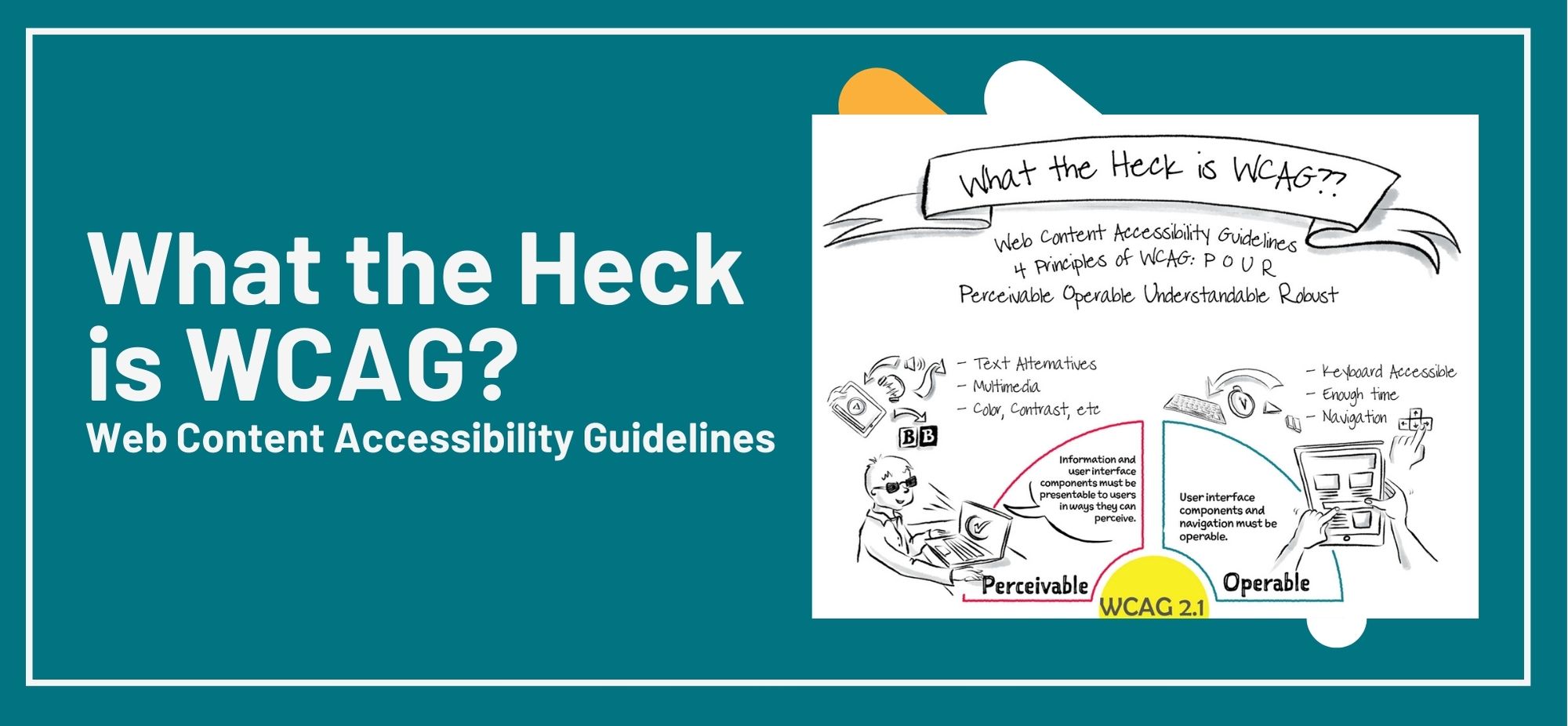
What the Heck is WCAG?
The web has made life easier for millions of people, but it can also be a barrier for those with disabilities who use assistive technologies to access it. When designing and developing a website, have you ever stopped to think of how someone who is blind is able to find their way around your website?
What is WCAG and Who is it For?
Table of Contents show
1 What is WCAG and Who is it For?
The Web Content Accessibility Guidelines (WCAG) are the worldwide standards for web accessibility. They were created by a group of accessibility experts from around the world and published by the World Wide Web Consortium (W3C). These guidelines are not just important for people with disabilities, they’re also important for search engines and other automated programs that try to understand the content of your site in order to index it and make recommendations.
The WCAG guidelines:
help website owners, developers and designers create accessible online content that meets the needs of people with disabilities. The
cover all aspects of web design — from user interface design and document structure through to coding practices that make pages easier to read by people with visual impairments.
apply to other types of digital content, such as mobile apps or web-based email clients.
Principles of WCAG
There are four principles to the web content accessibility guidelines.

WCAG Principle 1 – Perceivable
Information and user interface components must be presentable to users in ways they can perceive. This principle addresses how well users can see, hear, or otherwise perceive elements of a web page or application e.g., via presentation, auditory cues, or other input or output mechanisms.
WCAG Principle 2: Operable
Users must be able to operate the interface with the same ease as anyone else. This principle addresses how easy it is for users to interact with web pages and applications.
WCAG Principle 3: Understandable
This principle addresses how well users can understand content on a page or in an application without having to “figure things out”.
WCAG Principle 4: Robust
Content must be robust enough that it works for users across different devices, technologies and environments as long as content does not violate any other WCAG principle.

Hello! I'm Christiana — a Certified AI Consultant, AI Educator, Designer, and Accessibility Advocate. I help small business owners learn to use and implement AI confidently into their business workflows—without the overwhelm or the jargon. When I'm not designing, teaching, or talking tech, I’m usually designing and creating joyful things at OhSoColorful Co.
Follow me online